SASSA SRD Grant Changes in 2026
As the year 2026 continues, many SASSA beneficiaries want clear information about what has changed, what remains the same, and what they should expect going forward.
There has been a lot of confusion online about increases, extensions, and new rules. Some people hear different stories from friends or social media and do not know what to believe. This article explains the real situation of the SRD grant in 2026 in a clear and simple way so that anyone can understand it without stress.
The Current SRD Grant Amount in 2026
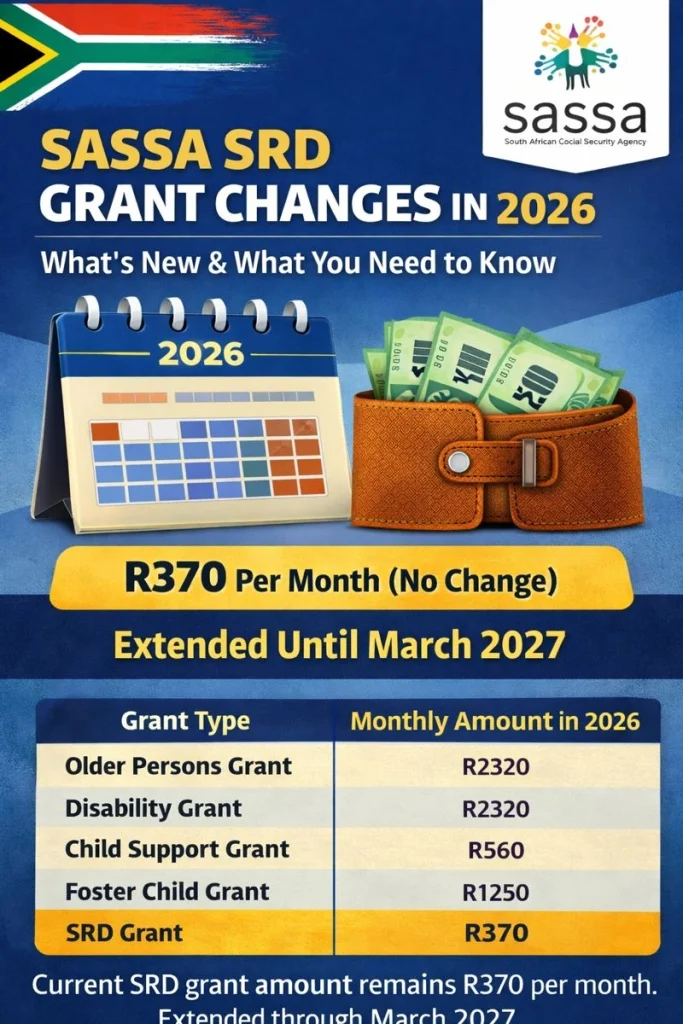
As of 2026, the SRD grant amount remains R370 per month. This amount applies to all approved beneficiaries across South Africa. There has been no official increase beyond this figure during 2026, even though many people hoped the grant would rise due to higher living costs.
The increase from R350 to R370 that happened earlier is still the latest confirmed adjustment. Any claims about much higher amounts are not true and should be ignored. Beneficiaries should always rely on official announcements and not on rumors.
Although R370 may not cover all expenses, it continues to help many people with food, transport, and basic needs. The government has not announced a new increase yet, but discussions about social support are ongoing.
Do you know how to fix SASSA Card Declined?
Eligibility Rules and Monthly Checks in 2026
The eligibility rules for the SRD grant have not changed in 2026. Applicants must still be between eighteen and fifty-nine years old and must not receive another social grant or formal income. People who receive UIF or other government income usually do not qualify.
SASSA continues to perform monthly verification checks. These checks confirm that beneficiaries still meet the requirements. If someone starts earning income above the allowed limit, their status may change.
It is important for beneficiaries to keep their personal and banking details updated. Incorrect information can lead to delays, failed payments, or temporary suspension until the issue is fixed.
Comparison of SRD Grant With Other SASSA Grants in 2026
The SRD grant is smaller than other social grants because it is designed as temporary relief. Other grants support groups with long-term needs, such as older persons or people with disabilities.
| Grant Type | Monthly Amount in 2026 |
|---|---|
| Older Persons Grant | R2320 |
| Disability Grant | R2320 |
| Child Support Grant | R560 |
| Foster Child Grant | R1250 |
| SRD Grant | R370 |
This comparison helps explain why the SRD amount is lower. Even though it is smaller, it plays an important role for people who do not qualify for permanent grants.
Extension of the SRD Grant Into 2026 and Beyond
One of the most important updates for beneficiaries is the extension of the SRD grant. The grant has been officially extended through 2026 and is scheduled to continue until at least March 2027. This extension gives relief to millions of people who depend on this support every month.
The extension means that eligible beneficiaries do not need to reapply if their status remains approved and their details stay correct. Monthly checks are still done to confirm eligibility, but the program itself is not ending in 2026.
This decision was made to ensure that unemployed adults are not suddenly left without support while long-term solutions are still being discussed. For now, beneficiaries can expect the SRD grant to continue under the same structure.
What Beneficiaries Should Expect Going Forward
Looking ahead, the SRD grant will continue in 2026 under the same rules and amount. There is no confirmed increase, but the extension provides stability for now. Discussions about future income support programs are ongoing, but nothing has replaced the SRD grant yet.
Beneficiaries should remain cautious of false information and scams. Only official updates should be trusted. Keeping personal details correct and checking status regularly helps avoid problems.
The SRD grant remains a temporary support system, but for many people in 2026, it is still a vital source of help. Understanding the current rules and updates allows beneficiaries to plan better and avoid unnecessary stress.